
ARTISANAL VINTAGE FABRICS
Reimagined for Modern Wear
Delphia marries an appreciation for art with the history of textiles and garment-making.

Shop Reversible Blazers


Sultry but chic is the theme of this skin-baring organza blouse. Timeless black organza gives a subtle sheen that sets off the “echt Perlmutter”, darker mother of pearl buttons superbly. The sheer weave promises movement and breathability, and black shade provides limitless styling options.
Fabric
1960’s American Organza. This fabric was sold by a woman whose grandfather was a pattern-maker for a NYC fashion house in the 1960s. She is in the process of reviewing and sharing his fabric collection for sewers around the world.
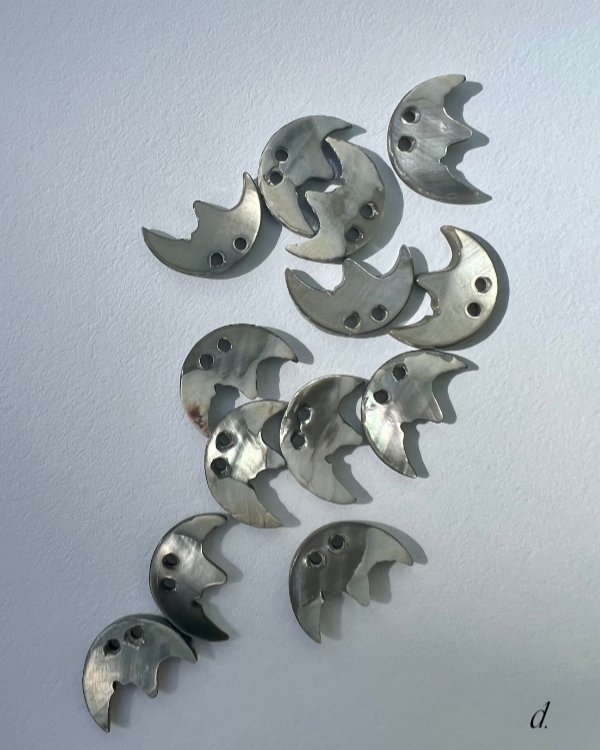
Buttons
1960’s German mother of pearl buttons. These mother of pearl buttons (“echt Perlmutter”) were made in Germany from dark shell stone and dyed blue. Dill Buttons was one of the most prolific button manufacturers in the 1960s and today continues to be headquartered in Barnauin, Bavaria. During the 1960s, there was a shortage of mother of pearl buttons — this may explain the popularity of dark shell stone during this time period.
Sizing Details
This blouse is a Medium, which means it is designed to accommodate U.S. sizes 2 through 8. View our detailed size chart and int'l sizes here.

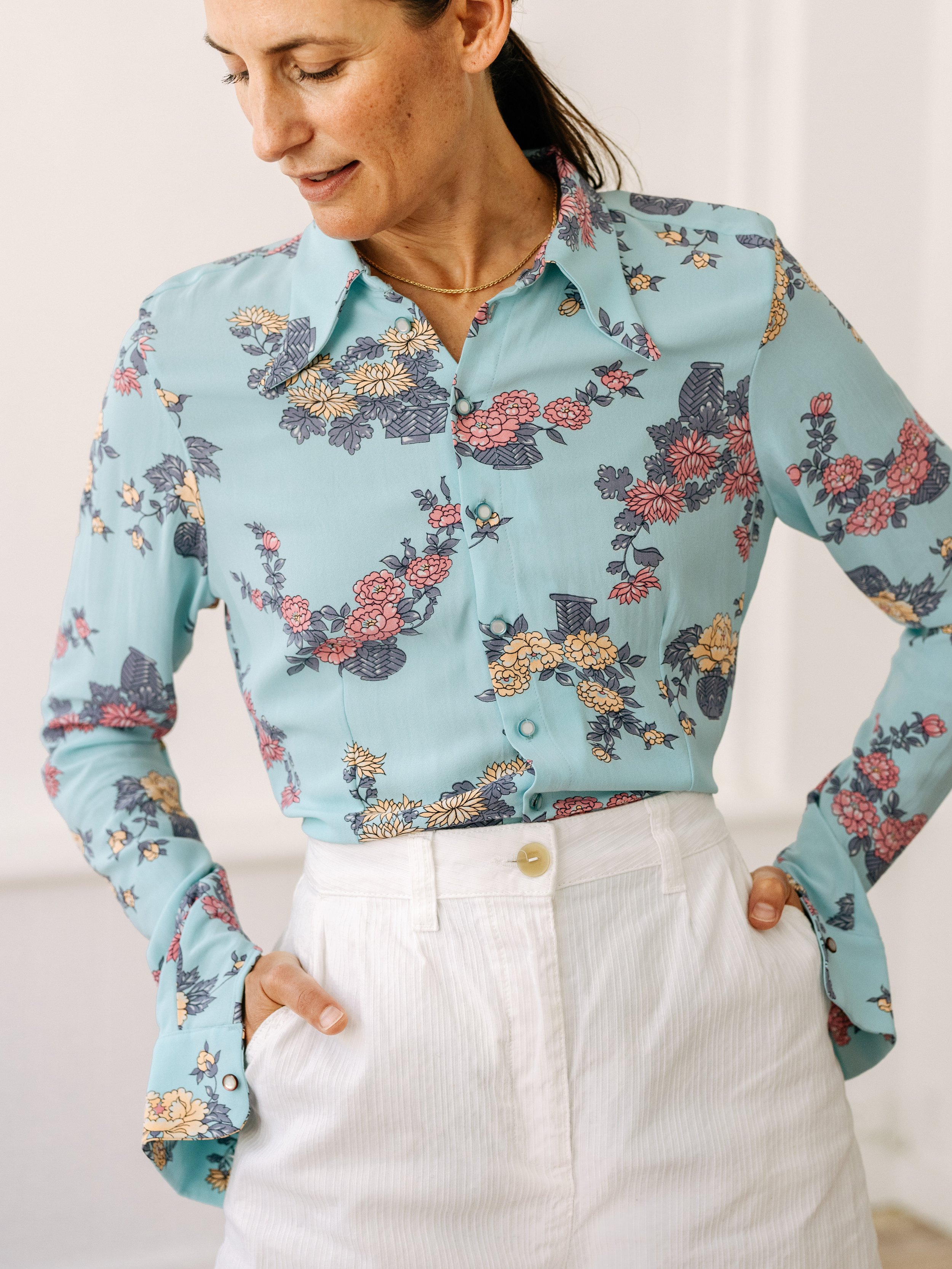
Blouse - 1940s Rayon
FABRIC ORIGIN —
1940s post-war Rayon jersey in a turquoise floral print. Feels like silk jersey.
BUTTONS —
1920s/30s 'Ultra Kraft' blue-dyed mother of pearl buttons from an old button factory called B. Schwanda and Son Ocean Pearl Button Factory in Southern New England. In the 1960s the company went bankrupt due to the popularity of cheap, plastic buttons. Prior to that, its pearl would have been harvested from American waters.
Shop Blouses


SHOP DRESSES


Follow Along


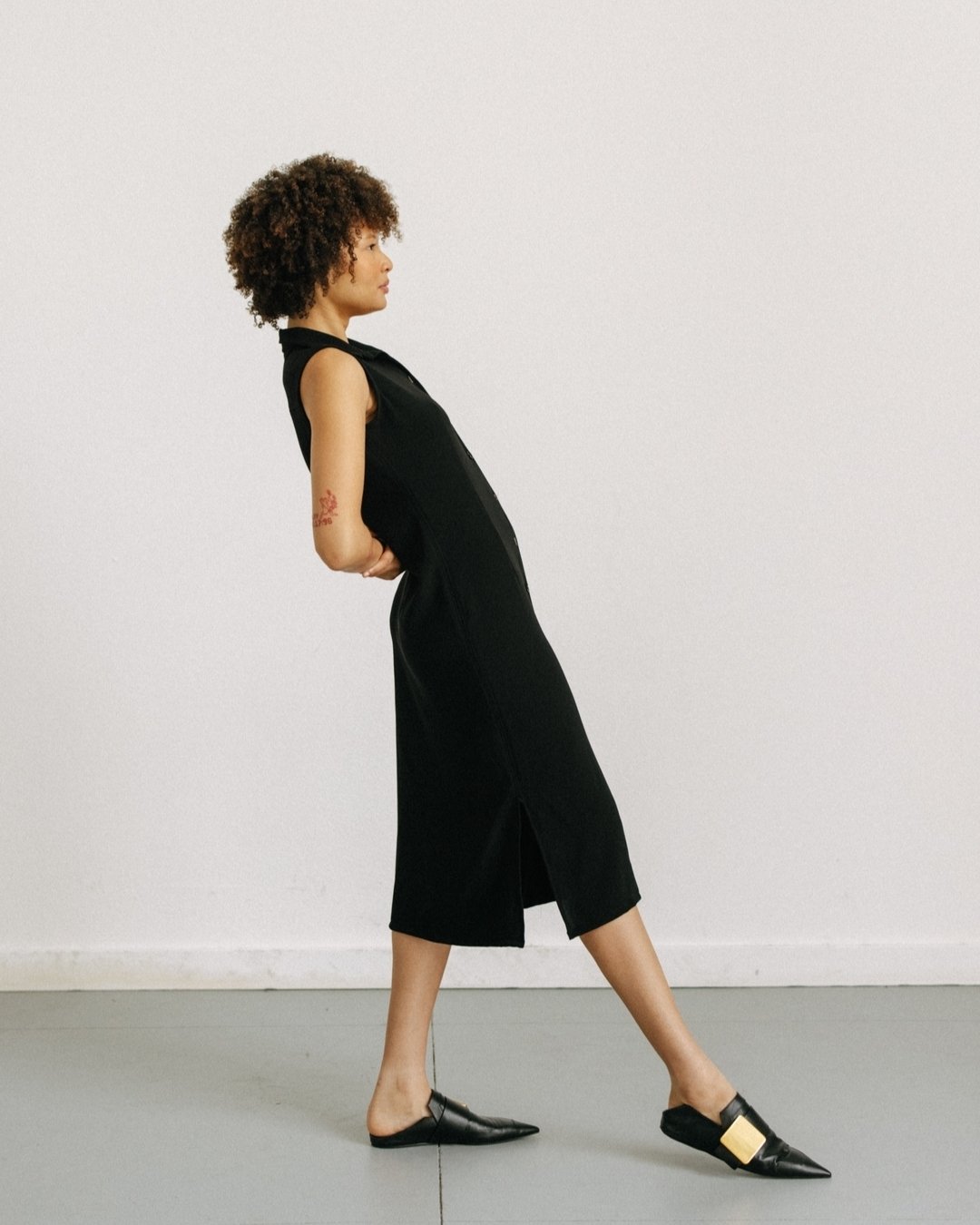
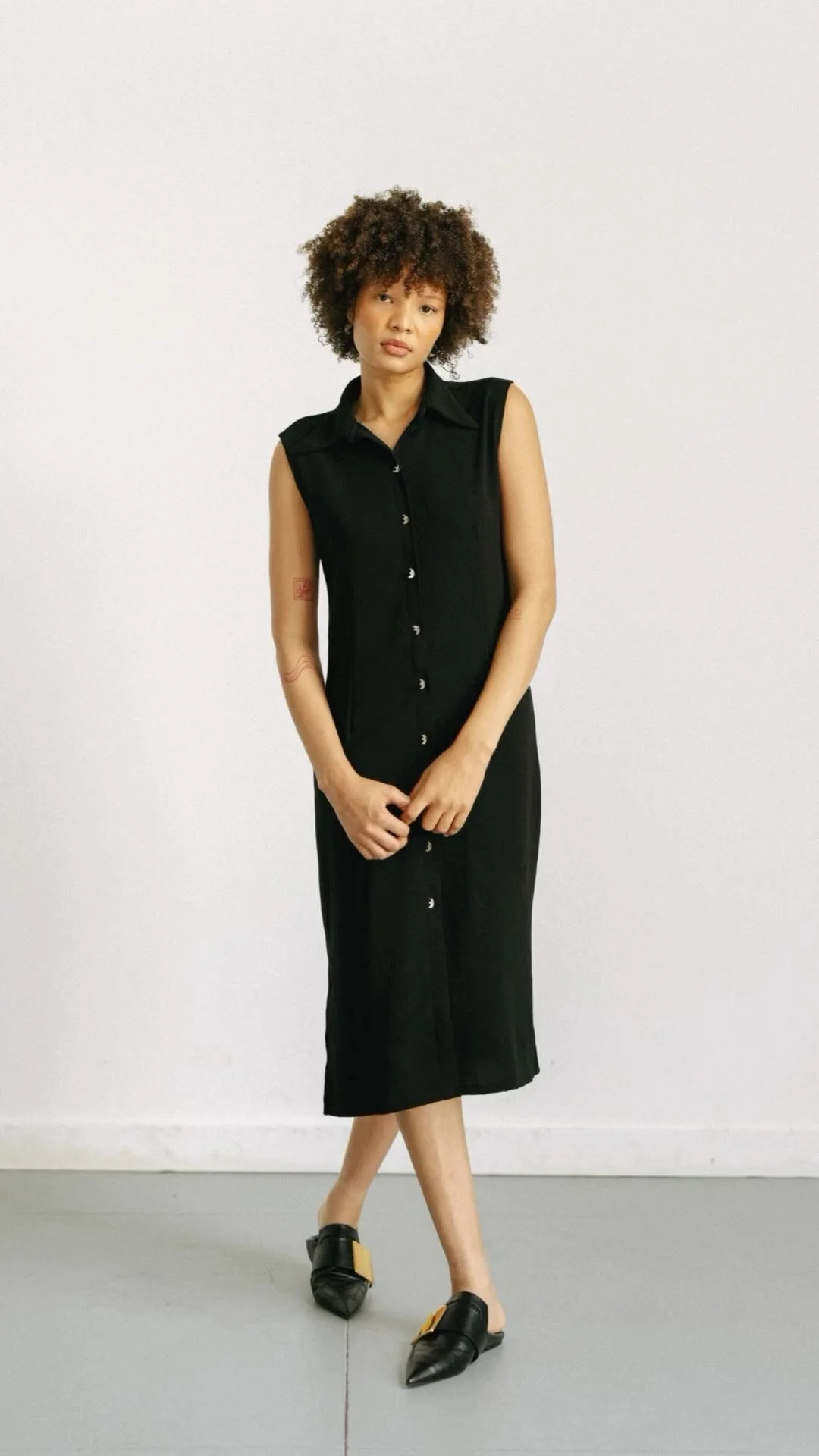
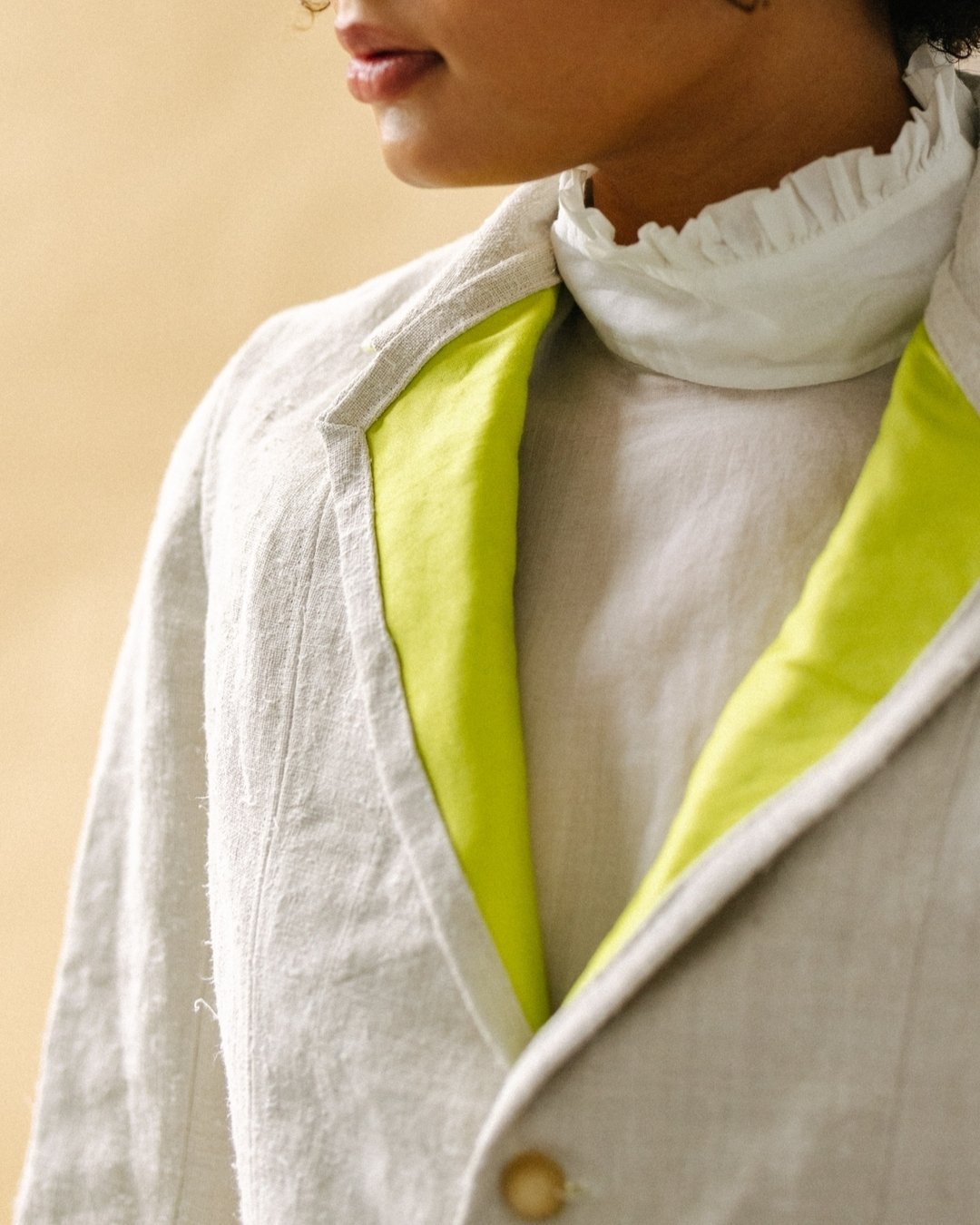
Emerald shines vibrantly in the form of this exquisite blazer made from WWII era wool/satin. Bright rayon satin and wool are woven back-to-back on this historic Skinner cloth to shape this reversible slimming blazer. Finished seams on the wool side ensure casual elegance when flipping this blazer around, and turning back cuffs either direction subtly nods to the versatility. Italian buttons fasten from both sides. The ideal day to night, casual to fancy piece that’s made to make you feel like a million and be cherished for a lifetime.
Fabric
1946s Skinner (brand) fabric, wool on one side and rayon satin on the other. This fabric was called “Sunbak” and made in Holyoke, Massachusetts by William Skinner and Sons. It was primarily used at the time for reversible robes and linings for jackets. A piece of this exact fabric is in the permanent collection of the National Museum of American History.
Skinner satins were nationally famous and this mill was innovative. They were one of the first mills to directly market to consumers. During the 1920s and 30s the brand was popularized with its usage in Hollywood, with silk gowns made from its satins adorned by such stars as Joan Crawford and Bette Davis on the silver screen. The company would also work extensively with the US Armed Forces during WWII, developing improved silk and other textile parachutes. William Skinner and Sons were regularly featured in the MoMa exhibitions (such as “Textiles U.S.A.”) throughout the 40s and 50s.
At the time this fabric was manufactured, the mill was still owned by the family of founder William Skinner, who emigrated from England to Massachusetts in 1843 and ran the company until his death in 1902. The company remained in operation in Holyoke until 1961, when Skinner’s heirs sold it to Indian Head Mills, which immediately closed the Holyoke operation.
Buttons
1960s Italian bakelite dyed green buttons.
Sizing Details
This blazer is a Medium, which means it is designed to accommodate U.S. sizes 2 through 8. View our detailed size chart and int'l sizes here.