
 Image 1 of 3
 Image 2 of 3
 Image 3 of 3
ABOUT THIS PIECE
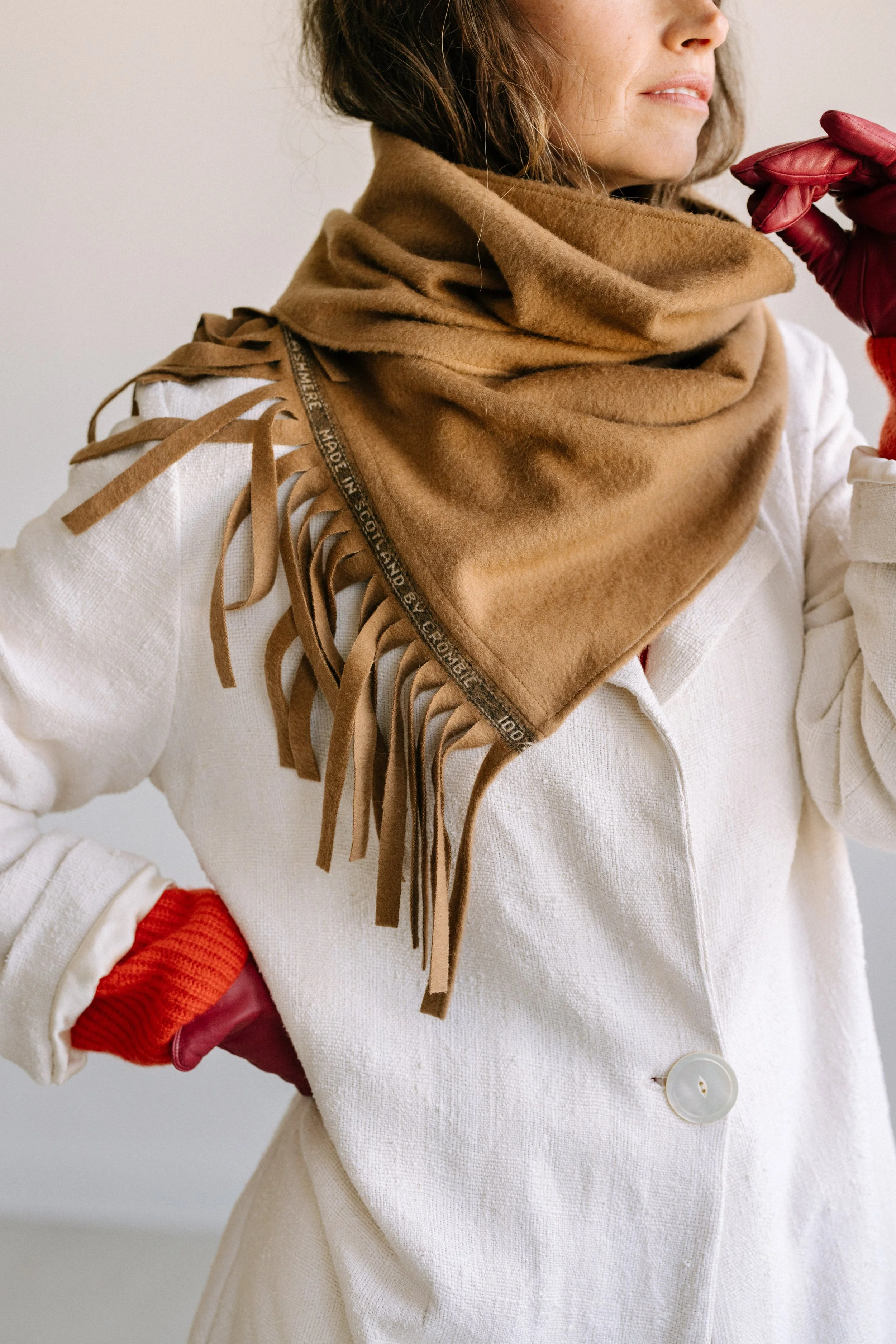
100% Scottish Cashmere c.1970s
Warm camel brown Cashmere scarf with fun fringed edge featuring the original selvedge.
Designed & made in Houston, Texas


American cotton, 19th C., elegantly paired with blue-green American mother of pearl c. 1920-40. The pattern is an abstract leaf print that is so modern it's hard to believe it was printed 120 years ago. This piece is ideal for day, and can be worn to work under a blazer or with a high-waisted skirt, and for cocktails with a sparkling earring to bring out the luminscence of this finely woven fabric.
Fabric
Purple silk cotton from the 1800s, which was found in excellent condition in a building in north Philadelphia (on Frankford Avenue just south of Lehigh), wrapped in late 19th century newspapers, from an old seamstress’ shop.
Buttons
Blue-green dyed mother of pearl buttons made from shells mined from the Mississippi River out of Washington, Iowa between the 1920s and 40s. America — Muscatine, Iowa in particular — was the pearl button capital of the world until the 1950s. Shells were mined right out of the Mississippi River. Called “toe digging”, everyday men and women could go down to the river, wade around, gather shells and take them to the manufacturer for payment. The industry died with the technological innovation of plastic.
Sizing Details
This blouse is a Medium, which means it is designed to accommodate U.S. sizes 2 through 8. View our detailed size chart and int'l sizes here. The measurements of this specific garment accommodate a bust of up to 40” and a waist of up to 35”. It is 25” long in the front and 26” long in the back.